The Innovator’s Dilemma

  • Post author:
  • Post category:Book

So David at work has been talking about this book quite a lot recently, and that meant I had to read it despite the failure of Debugging to delight me. Interestingly, the book starts by telling the story of the hard disk industry, which aligns well with Chip War's approach of telling the story of the semiconductor industry. Apparently the universe thinks I need to know more tech history! The book asserts that disruptive innovation occurs when incumbent players become too good at serving their current market with improved products or services. While this might seem like the result of rational management, often those products end up over delivering compared to what customers want, and as a result then costing more than customers really want to spend. Disruptors on the other hand often launch with a worse product which doesn't meet the needs of the incumbent's customers, but does address the needs of some previously unserviced market segment. That's great for everyone, until the new player adds sufficient functionality to now be competitive with the incumbent player, but at a lower price point -- that's when life gets sad for the incumbent. An interesting point in the discussion is that the…

Continue ReadingThe Innovator’s Dilemma

Chip War

  • Post author:
  • Post category:Book

I think it was Hugh who recommended this book. I'm greatful as it was an excellent read and definitely didn't make me duck over to eBay to buy an Intel 4004 chip set to play with. The book uses the backdrop of our current struggles to retain supremacy in high tech manufacturing versus an ambitious China to tell the story of the semiconductor industry in general. It's a global story of massive proportion, with a huge amount of the global economy now dependent on a product which didn't exist 75 years ago. The story starts just after world war two, with Fairchild Semiconductor and Texas Instruments battling it out to produce integrated circuits from newfangled transistors for the Apollo and Minuteman 2 programs. Importantly, Silicon Valley saw consumer market adoption of semiconductors and cheap efficient Asian manufacturing as key to driving down prices and increasing yield rates. At the same time the Pentagon saw integrated circuits as key to maintaining a technological advantage over their Cold War rivals -- the Soviet Bloc was winning in terms of quantity of armament, so the plan was to win with quality of armament. Effectively, the Pentagon sought to bankrupt the Russians by making…

Continue ReadingChip War

Dust

  • Post author:
  • Post category:Book

Hugh Howey is a master of suspense and as a result I found this book hard to read -- it's clear things are off the rails and characters I care about are going to get harmed (another Howey trademark it seems), but you just have to keep on marching through. As a result I found myself taking frequent breaks to think about what was happening, but finding myself having to pick the book up again. That is, this book is really really good, but Howey isn't afraid to have a character experience the consequences of their actions. That said, I don't really understand the purpose of the marriage sub-plot. I am sure its there for a reason, but it felt oddly out of place against the rest of the story arc.

Continue ReadingDust

Debugging

  • Post author:
  • Post category:Book

One of the other architects at work was running a reading group for our North American comrades, and I felt left out so I figured I may as well just pick up the book to see what the deal was. This book is a bit old, and was written at the time to try and be funny, but to be honest I don't think the humour has aged well and it makes the book jarring to read. Overall I'd describe the book as having been written in the style of a long form chatty blog post, which is a bit unusual. 90% of the readers of this book will be looking for advice on how to debug software systems, but the book frequently uses hardwaare systems as examples. That speaks to the author's background, but its not super helpful for modern audiences living in a software defined world. The book is also a bit dated in terms of terminology and expectations of the work environment -- for example, the discussion of repeatable testing doesn't mention automated regression testing at all, and the only mention of automated tests is fleeting at best. Another example is that the author recommends that you…

Continue ReadingDebugging

cpython internals

  • Post author:
  • Post category:BookPython

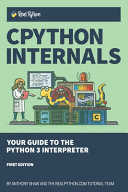
CPython Internals Book Cover CPython Internals
Anthony Shaw
May 5, 2021
396
★★★★☆

Get your guided tour through the Python 3.9 interpreter: Unlock the inner workings of the Python language, compile the Python interpreter from source code, and participate in the development of CPython. Are there certain parts of Python that just seem like magic? This book explains the concepts, ideas, and technicalities of the Python interpreter in an approachable and hands-on fashion. Once you see how Python works at the interpreter level, you can optimize your applications and fully leverage the power of Python.

I have been paid money to write Python code since about 2006, so I figured it was probably time that I should understand some of the inner workings of Python. I therefore picked up two books on the topic, this one being the first of the two.

This book to be honest isn’t completely what I expected. Its very well written and quite interesting, but its more about the things you’d need to know to become a Python core developer, rather than the things you should know as a user of Python like how the Python dictionary implementation is built.

(If you want that specifically, this video is an excellent introduction).

(more…)

Continue Readingcpython internals

Shift

  • Post author:
  • Post category:Book

This is the second book in the Silo series, following on the Wool, which I recently read. I think to a certain extend this book is better than the first one -- I certainly found it compelling. An excellent read that explains how the universe described in Wool came to be, but yet also sets the scene for the third book in the trilogy.

Continue ReadingShift

Solve for Happy

  • Post author:
  • Post category:Book

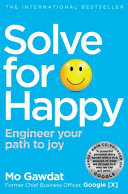
Solve for Happy Book Cover Solve for Happy
Mo Gawdat
January 10, 2019
368
★★★☆☆

Solve for Happy is a startlingly original book about creating and maintaining happiness, written by a top Google executive with an engineer's training and fondness for thoroughly analyzing a problem.

Mo Gawdat was kind of a big deal, at IBM, Microsoft, and then Google. But he was unhappy, so he decided to take an engineering approach and try to systematically “solve for happy” and work out why adding more money, shiny objects, and adoration of others didn’t actually make him happy.

(more…)

Continue ReadingSolve for Happy

Starter Villain

  • Post author:
  • Post category:Book

Now, I might be biased because I like John Scalzi's stuff, but this book was really good. It starts slower than a normal Scalzi book, and takes a couple of chapters to really get going, but I am glad I was patient with it. Apart from that its a quick easy read. Its a typical Scalzi book, light hearted and fun. I think this one requires you suspend disbelief a little harder than others (except perhaps for Redshirts) but that doesn't make it less enjoyable.

Continue ReadingStarter Villain

Wool

  • Post author:
  • Post category:Book

Chet bought me this book and demanded I read it, and honestly that was a good call. The book reminds me a bit of  Oryx and Crake, but perhaps that's unfair given I read that one eight years ago and have probably forgotten some important details. The book is well paced and engaging. Despite being as long as many of Neil Stephenson's books, I felt it was a much more approachable read than that. I found the second half of the book a bit harder to read that the first half, because it doesn't pull many punches in terms of the consequences of people's actions and is pretty good at building suspense. There were definitely points where I had to pause because I was pretty sure something bad was going to happen to someone I'd grown fond of. That said, it was still a great read. I've gone and bought the next two in the series because I'm confident I'm going to want to read them now too.

Continue ReadingWool

Understanding Compression

  • Post author:
  • Post category:Book

I bought this book on a whim, because I was trying to understand a compression scheme and had trouble finding good documentation on it. The book overall is written in a quite conversational style that I find a bit distracting from the content, and the introduction is a bit repetitive -- yes I get it, there's some maths involved. Thanks. That said, the content is a solid and quite approchable introduction to the topic area. I haven't ever thought before about entropy in information theory for example, I now feel like I could give a coherent elevator description of the topic. Another example is the description of Huffman codes. Here the topic is introduced with four pages and a few diagrams and I "get it". In the random algorithms book on my shelf (Introduction to Algorithms, third edition by Cormen, Leiserson, Rivest, and Stein), the same content takes ten pages and includes a six page set of lemmas around the code's correctness. Both descriptions would get you there in the end, but Understanding Compression's description is definitely more approachable. Overall, its very rare for me to sit down and actually read a technical book from cover to cover, but this book…

Continue ReadingUnderstanding Compression

End of content

No more pages to load