I’ve read this book a few times, but honestly the Foundation TV series has left me with a new enthusiasm to re-read some Asimov stuff. I have previously read the entire extended multi-author series, and honestly a fair few of them sucked — especially the ones by other authors — so this time I have the luxury of being a bit more picky. Worse, Asimov remixed the robot stories several times into various volumes, and it can be quite confusing. The Complete Robot contains all the robot stories, and replaces I, Robot (reading one, reading two), The Rest of the Robots; Robot Dreams; and Robot Visions. It also contains a couple of previously unpublished stories.
The Idea Factory Jon Gertner Business & Economics Penguin March 15, 2012 434
★★★★★
The definitive history of America’s greatest incubator of innovation and the birthplace of some of the 20th century’s most influential technologies “Filled with colorful characters and inspiring lessons . . . The Idea Factory explores one of the most critical issues of our time: What causes innovation?” —Walter Isaacson, The New York Times Book Review “Compelling . . . Gertner's book offers fascinating evidence for those seeking to understand how a society should best invest its research resources.” —The Wall Street Journal From its beginnings in the 1920s until its demise in the 1980s, Bell Labs-officially, the research and development wing of AT&T-was the biggest, and arguably the best, laboratory for new ideas in the world. From the transistor to the laser, from digital communications to cellular telephony, it's hard to find an aspect of modern life that hasn't been touched by Bell Labs. In The Idea Factory, Jon Gertner traces the origins of some of the twentieth century's most important inventions and delivers a riveting and heretofore untold chapter of American history. At its heart this is a story about the life and work of a small group of brilliant and eccentric men-Mervin Kelly, Bill Shockley, Claude Shannon, John Pierce, and Bill Baker-who spent their careers at Bell Labs. Today, when the drive to invent has become a mantra, Bell Labs offers us a way to enrich our understanding of the challenges and solutions to technological innovation. Here, after all, was where the foundational ideas on the management of innovation were born.
This book is a history of the Bell Labs run by AT&T for much of the 20th century. These are the labs which produced many of the things I use day to day — Unix and the C programming language for example, although this book focuses on other people present at the lab, and a bit earlier than the Unix people. Unix, a history and a memoir for example is set in the same location but later in time.
This is the fifth murderbot book and it's a fun read just like the rest. Unfortunately, it's also really short just like most of the others and I find that the story is therefore just a bit simple and two dimensional. It is nice that the story isn't just a repeat of previous entries in the series, although I would say that this one is relatively free standing in that it doesn't progress the overall story arc. That said, no regrets reading this one.
This is the third book in this series, coming after Children of Time and Children of Ruin. While I really liked the first of the books in the series, the second felt weaker. While this one doesn't review as well as the second I think it's actually a stronger book. Whilst sometimes a bit repetitive I think the ideas presented here are novel, and the book does a good job of finding a new way of discussing the tensions that refugees and mass immigration create for societies. This book is also an interesting combination of science fiction and fantasy -- the familiar territory of a failing colonization ship sent out on a hope and a prayer, and then a fantasy story about a little girl trying to save her family and a group of strangers come to town. Overall, I enjoyed this book.
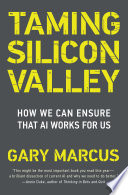
Taming Silicon Valley Gary F. Marcus Computers MIT Press September 17, 2024 247
★★★☆☆
How Big Tech is taking advantage of us, how AI is making it worse, and how we can create a thriving, AI-positive world. On balance, will AI help humanity or harm it?
The similarities and contrast between this book and AI Snake Oil are striking. For example, AI Snake Oil describes generative AI as something which largely works but is sometimes wrong, whereas this book is very concerned about how they’ve been rushed out the door in the wake of the unexpected popularity of ChatGPT despite clear issues with hallucinations and unacceptable content generation.
Yet the books agree on many things too — the widespread use of creators’ content without permission, weaponization of generative AI political misinformation, the dangers of deep fakes, and the lack of any form of factual verification (or understanding of the world at all) in the statistical approaches used to generate the content. Big tech has no answer for these “negative externalities” that they are enabling and would really rather we all pretend they’re not a thing. This book pushes much harder on the issue of how unregulated big tech is, and how it is repeatedly allowed to cause harm to society in returns for profits. It will be interesting to see if any regulation with teeth is created in this space.
I'm not really sure why, but I found it harder to get going on this book than the others in the series. It might have been that I was also reading a particularly good non-fiction book at the same time, or it might have been that the premise for these books is starting to wear a bit thin. I'm unsure. That said, while the start of the book covers familiar territory, the overall story rapid diverges into new things and I found it quite readable once I build up some momentum. In the end, I enjoyed this book and would definitely read it again sometime.
AI Snake Oil Arvind Narayanan, Sayash Kapoor 2024 348
★★★★★
From two of TIME's 100 Most Influential People in AI, what you need to know about AI and how to defend yourself against bogus AI claims and products. Confused about AI and worried about what it means for your future and the future of the world? You're not alone.
Nick recommended I read this book, so here it is.
The book starts by providing an analogy for how we talk about AI — imagine that all transport vehicles were grouped by one generic term instead of a variety like “car”, “bus”, “rocket”, and “boat”. Imagine the confusion a conversation would experience if I was talking about boats and you were talking about rockets. This is one of the issues right now with discussions of “AI” — there are several kinds of AI, but the commentary is all grouped together and conflating the various types. I think this is probably a specific example of what Ben Goldacre talks about in Bad Science — science reporting by non-scientists is often overly credulous, and misses the subtleties.
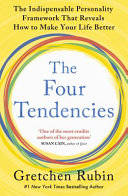
Regardless, attempts to pigeonhole people into psychological buckets have always made me uncomfortable — be they Myers Briggs, Strengths Finder, or now the Four Tendencies. Ironically under the Four Tendencies framework I think that would make me a Questioner, but the (very short) analysis quiz declared me to be an Obliger. I am very sure my management chain at work would agree that if I am an Obliger I’m definitely hiding it pretty well. I’m not really sure what that means to be honest.
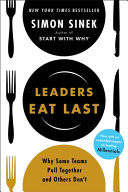
Leaders Eat Last Simon Sinek Biography & Autobiography Penguin Books 2017 350
★★★★☆
Leaders eat last : why some teams pull together and others don't is the much anticipated sequel to the global best seller, start with why by Simon Sinek. This book talks about how great leaders sacrifice their own comfort for the good of those in their care. With the help of numerous intriguing examples, the author attempts to prove that the best organisations foster trust and cooperation. As the author points out, this book is not a management theory, but it actually a biological one. Individuals thrive only when they feel safe among a group.
This is the first Simon Sinek book I’ve read. His stuff has been on my mental to do list for a long time, but never seemed to get to the top until now. This is about a book about how employee happiness and trust in their management directly results in better outcomes for employers, and how the best way to create happy employees is via mutual trust and empathy. In fact the book goes further and outright states that staying in a job that makes you unhappy, even if it also makes you feel safe, is bad for your health and eventually your life expectancy. I haven’t seen this stayed quite this clearly before and the book wastes no time in making this point.
Leaders Eat Last also has a section on the various chemicals in our brains and how they guide our behaviour. I felt specifically called out by this quote on the addictive nature of social media and how it interacts with our dopamine levels:
…if you wake up in the morning and the first thing you crave is a drink, you might be an alcoholic. If you wake up in the morning and the first thing you do is check your phone to read email or scan your social media before you’re even out of bed, you might be an addict.
How very aligned with Digital Minimalism. Now in my defense, the first thing I check in the morning is the state of outstanding GitHub pull requests so I guess I’m not a social media addict?
This book did not go where I expected it to. Sure, it has a species uplift plot which is similar to Children of Time, but that's not all that's happening here. If the previous book was about refugees and redemption, this book is about alternative ways of structuring societies (I don't want to ruin the surprise by being too specific). Let's just say some of these societies are small and some are big, but they both cooperate to achieve their goals better than perhaps our society does. There's definitely a pattern forming about how books in this series resolve their conflicts. I'm not normally into horror as a genre, and there are definitely horror elements to this story. I probably wouldn't have bought this book if I'd known how it was going to be different from the previous one. That said, the horror element decreases after a mid-book peak and overall I enjoyed the story although not as much as that of the first book in the series.